You notice a water stain spreading across your ceiling after a heavy rain. Or maybe there’s a musty smell near your fireplace that wasn’t there before. Perhaps you’ve seen actual dripping during a storm. Whatever the symptom, you’re facing a chimney leak—and it’s not going to fix itself.
Chimney leaks are deceptively destructive. What starts as a small amount of water infiltration can lead to thousands of dollars in damage to your home’s structure, your fireplace system, and even your interior walls and ceilings. The good news? Most chimney leaks are entirely fixable once you identify the source.
This guide covers everything Central Texas homeowners need to know about chimney leaks: what causes them, how to identify the source, what repairs typically cost, and how to prevent future water intrusion.
Why Chimneys Leak: The 6 Most Common Causes
A leaking chimney rarely has a single, obvious cause. Water is opportunistic—it finds every crack, gap, and weakness in your chimney system. Here are the six most common entry points our technicians see across Central Texas:
1. Damaged or Deteriorated Chimney Crown
The chimney crown is the concrete or mortar cap that covers the top of your chimney, surrounding the flue. Its job is to shed water away from the flue opening and prevent rain from pooling on top of the chimney structure.
Here in Central Texas, crowns take a beating. Our intense summer heat causes expansion, while sudden temperature drops—especially during those unexpected winter cold snaps—cause contraction. This constant thermal cycling creates hairline cracks that gradually widen. Add in our dramatic spring storms with driving rain, and water finds its way into every crack.
Signs of crown damage: visible cracks on the crown surface, pieces of mortar or concrete on your roof or ground, water stains inside the chimney chase.
2. Failed Chimney Flashing
Flashing is the metal (usually aluminum or galvanized steel) that seals the joint where your chimney meets the roof. Properly installed flashing has two components: step flashing that weaves into the shingles and counter-flashing embedded into the chimney mortar.
Flashing fails for several reasons: poor initial installation, sealant deterioration over time, thermal expansion pulling it away from the chimney, or roof repairs that disturbed the original seal. This is one of the most common causes of chimney leaks we see—and unfortunately, it’s often misdiagnosed.
Signs of flashing failure: water stains on ceilings or walls near the chimney, visible gaps between flashing and chimney, rust stains on roofing or siding, leaking only during heavy rain or wind-driven rain.
3. Deteriorated Mortar Joints
The mortar between your chimney’s bricks is designed to last 25-30 years under normal conditions. But “normal” doesn’t describe Central Texas weather. Between scorching summers that can crack and dry out mortar and occasional freeze-thaw cycles that exploit any existing weakness, mortar joints often fail earlier than expected.
When mortar deteriorates, water seeps directly into the brick structure. This moisture gets trapped inside, causing the bricks themselves to spall (flake apart) over time. What starts as a simple repointing job can become a partial rebuild if left unaddressed.
Signs of mortar deterioration: white staining on bricks (efflorescence), crumbling or missing mortar, gaps visible between bricks, pieces of mortar on the ground around your chimney.
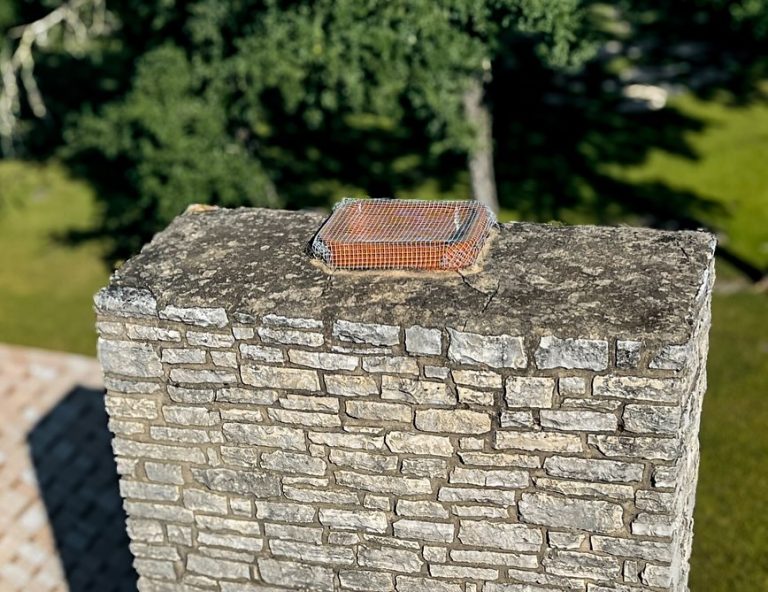
4. Missing or Damaged Chimney Cap
A chimney cap covers the flue opening at the top of your chimney. Without one, rain falls directly into your chimney system. It’s that simple. We regularly inspect chimneys that never had a cap installed or where the original cap rusted through years ago.
Beyond keeping rain out, chimney caps prevent animals from nesting in your flue (a common problem in Central Texas, where raccoons, squirrels, and birds all find chimneys attractive), block downdrafts, and contain sparks from wood-burning fires.
Signs you need a cap: no visible cap on your chimney top, rusted or damaged existing cap, animal noises from your chimney, debris falling into your firebox, water pooling inside the firebox after rain.
5. Porous Masonry (Brick Absorption)
Brick is naturally porous—it absorbs water like a sponge. New bricks are typically treated with a water-resistant seal, but this protection wears off over time. An unsealed chimney can absorb significant amounts of water during heavy rain, which then migrates through the masonry structure and appears as interior dampness.
This type of leak is particularly frustrating because there’s no obvious entry point. The chimney exterior might look fine, but water is slowly saturating the brick structure from all sides.
Signs of masonry absorption: damp interior walls during/after rain (even without visible exterior damage), white mineral deposits on brick surfaces, general musty odor near the chimney area.
6. Condensation Issues
Not every “leak” comes from external water. Gas appliances (furnaces, water heaters) vented through your chimney produce significant moisture as a combustion byproduct. If your flue liner is damaged, improperly sized, or unlined, moisture condenses on the cool chimney walls and drips down, mimicking a leak.
Condensation problems are more common in homes where a wood-burning fireplace was converted to gas, or where a high-efficiency furnace was connected to an oversized flue designed for older equipment.
Signs of condensation issues: “leaking” that occurs even without rain, white or rust-colored staining inside the flue, deterioration of the flue liner, damp odor particularly after using gas appliances.
How Central Texas Weather Accelerates Chimney Damage
If you’ve lived in the San Antonio, Austin, or New Braunfels area for any length of time, you know our weather doesn’t follow the rules. This unpredictability creates unique challenges for chimney maintenance:
- Extreme heat: Summer temperatures regularly exceed 100°F, causing masonry materials to expand and contract dramatically between day and night. This thermal stress opens hairline cracks that gradually widen.
- Flash flooding rains: Our region experiences intense, heavy rainfall during storm systems. Several inches can fall in just hours, overwhelming any weak points in your chimney’s defenses.
- Occasional hard freezes: While rare, hard freezes like the 2021 winter storm can devastate chimneys. Water that seeped into cracks expands when frozen, dramatically widening those cracks.
- UV exposure: Our intense sun degrades sealants, flashing materials, and cap finishes faster than in less sunny climates.
- Wind-driven rain: Storm systems often bring horizontal rain that finds entry points vertical rain would miss entirely.
The result? Chimneys in Central Texas often develop leak problems earlier than the same construction would in milder climates. Annual inspections are particularly important in our region.
What Chimney Leak Repairs Cost in Central Texas
Repair costs vary significantly depending on the leak source and extent of damage. Here’s what Central Texas homeowners typically pay for common repairs:
| Repair Type | Typical Cost Range |
| Chimney cap with installation | $1,500 – $2,000 |
| Crown repair (minor cracks) | $1,200 – $1,800 |
| Crown replacement | $2,000 – $4,000 |
| Flashing repair | $800 – $1,500 |
| Flashing replacement | $2,800 – $4,800 |
| Tuckpointing (per linear foot) | $30 – $50 |
| Chimney waterproofing | $600 – $1,800 |
| Flue liner repair/replacement (per foot) | $350 – $550 |
| Partial chimney rebuild | $4,000 – $9,000 |
These estimates assume straightforward repairs without extensive interior damage. If water infiltration has damaged drywall, insulation, or structural components, remediation costs add to the total. This is why early detection matters—a $800 flashing repair caught early is far better than a $6,000+ repair bill after years of water damage.
DIY vs. Professional Repair: What You Should Know
The internet is full of DIY chimney leak repair advice. Some of it is reasonable; much of it will make your problem worse. Here’s an honest assessment:
What Homeowners Can Reasonably Handle
- Visual inspection from ground level: You can spot obvious problems like a missing cap, visible cracks in the crown, or damaged flashing without climbing on your roof.
- Applying waterproof sealant: If your chimney has minor porosity issues and you’re comfortable working on a roof, brushing on a vapor-permeable water repellent is a reasonable DIY project.
- Installing a basic chimney cap: Simple slip-on caps for single-flue chimneys can be a DIY installation, though proper sizing is critical.
What Requires Professional Expertise
- Diagnosing the actual leak sourceis critical. Without proper training and equipment, homeowners often treat symptoms rather than causes—sealing visible cracks while missing failed flashing hidden beneath shingles.
- Crown repair or replacement: Proper crown construction requires specific materials and slopes that effectively shed water. DIY patch jobs typically fail within a year or two.
- Flashing work: Flashing installation involves modifying both your roof and chimney structure. Improper installation creates new leak points while appearing to fix the original problem.
- Any work requiring roof access: Falls from roofs are a leading cause of homeowner injuries. Professionals have proper safety equipment and training.
- Structural repairs: Tuckpointing, partial rebuilds, and liner work require specialized skills and should never be attempted without training.
Preventing Future Chimney Leaks
The most cost-effective approach to chimney leaks is preventing them in the first place. Here’s what actually works:
Annual Inspections
A CSIA-certified chimney professional can identify developing problems before they become expensive repairs. Annual inspections typically cost $288 plus tax, and often pay for themselves many times over by catching small issues early.
Waterproofing Treatment
Vapor-permeable waterproofing (not paint or standard sealant) creates a barrier against water absorption while allowing the masonry to breathe. This treatment typically lasts 5-10 years and costs $600–$1,800, depending on chimney size.
Quality Chimney Cap
A properly sized, quality chimney cap is your first line of defense against direct water entry. Stainless steel caps offer the best longevity in our climate, with warranties often extending 15+ years.
Address Minor Issues Promptly
Small cracks and minor deterioration are far cheaper to fix than the damage they’ll cause if ignored. If you notice any signs of water intrusion, schedule an inspection rather than waiting to see if it worsens (it will).
Frequently Asked Questions
A: This usually indicates flashing problems or masonry absorption. Light rain doesn’t produce enough water volume to overwhelm compromised defenses, but heavy rain finds every weakness. Wind-driven rain during storms can also force water into gaps that vertical rain would miss.
A: Not with regular sealant or paint—these trap moisture inside the masonry, causing accelerated deterioration. Proper chimney waterproofing uses vapor-permeable products that repel liquid water while allowing water vapor to escape. Waterproofing alone won’t fix structural issues such as cracked crowns or failed flashing.
A: Several possibilities: the damage may be on parts of the chimney you can’t see from ground level, the flashing may have failed beneath your shingles, or you may have a condensation issue rather than a true leak. A professional inspection using camera equipment can identify hidden problems.
A: Properly executed repairs should last 15-20+ years. A quality chimney cap lasts 15-20 years. Flashing should last 20-30 years. Waterproofing treatment lasts 5-10 years. Tuckpointing and crown repairs typically last 20-25 years in our climate when properly selected materials are used.
A: Typically, insurance covers sudden damage from covered events (storm damage, fallen trees) but not gradual deterioration or lack of maintenance. If a storm clearly caused new damage, document it thoroughly and file a claim promptly. For wear-and-tear issues, repairs are generally the homeowner’s responsibility.
A: Look for CSIA (Chimney Safety Institute of America) certification—it’s the industry’s primary credential and requires ongoing education. Additional certifications like C-DET (Certified Dryer Exhaust Technician) and F.I.R.E. (Fireplace Investigation Research Education) indicate advanced training. Check reviews, verify insurance, and be wary of contractors who diagnose problems without thorough inspection.
Concerned about a chimney leak? Our CSIA-certified technicians serve homeowners across Central Texas—from San Antonio and Austin to New Braunfels, Georgetown, and everywhere in between. Schedule an inspection to identify the source of your leak and get a clear repair plan.