Skip to content
Chimney damage doesn’t happen all at once. It develops gradually — a small crack in the crown, deteriorating mortar joints, a shifting flue liner — until the problem becomes too significant to ignore. In San Antonio, where expansive clay soils, humidity, and intense UV exposure accelerate wear on masonry structures, chimney repair is not a matter of if, but when.
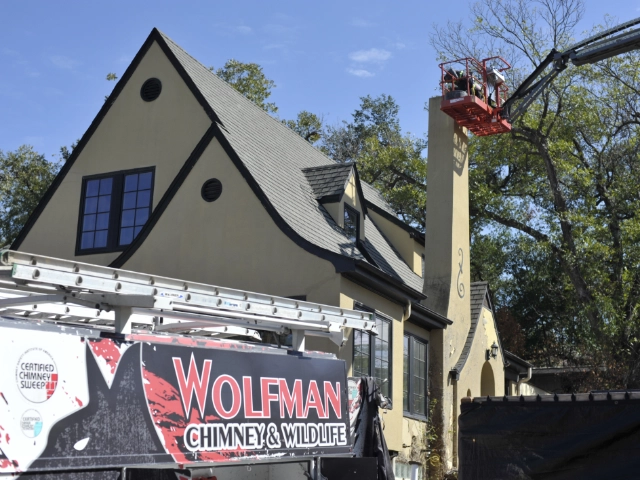
Wolfman Chimney & Fireplace provides comprehensive chimney and fireplace repair services throughout San Antonio and Bexar County. From minor mortar repairs to full chimney rebuilds, our CSIA-certified technicians have the training and experience to diagnose the root cause of the problem and deliver lasting solutions.
San Antonio is ranked as the second-worst metro area in the United States for foundation issues, driven by the region’s expansive clay soils. When the ground beneath your home shifts — swelling during heavy rains and contracting during drought — your chimney is often the first structure to show damage. Chimneys are heavy, concentrated loads sitting on a relatively small footprint, making them especially vulnerable to soil movement. Signs include a chimney leaning away from the house, stair-step cracking in the exterior brickwork, separation between the chimney and the roofline, and cracks appearing in the firebox or flue.
The chimney crown is the concrete or mortar slab that seals the top of the chimney around the flue. It is your chimney’s first line of defense against water entry. In San Antonio’s climate, where intense summer heat followed by driving rain cycles year after year, crowns crack and deteriorate faster than in more temperate regions. A damaged crown allows water to penetrate the chimney structure, leading to freeze-thaw damage during rare cold snaps, efflorescence (white mineral deposits on brick), and interior moisture damage.
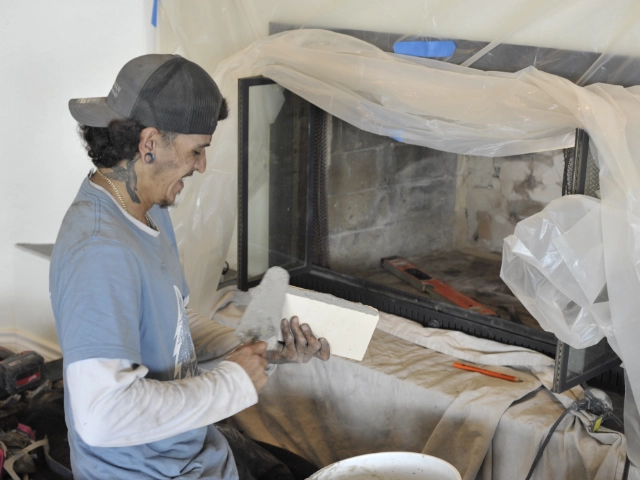
The mortar between your chimney’s bricks degrades over time, especially when exposed to moisture and temperature extremes. Deteriorated mortar joints allow water to enter the chimney structure, accelerating decay from the inside out. Tuckpointing — the process of removing damaged mortar and replacing it with fresh material — is one of the most common and cost-effective chimney repairs we perform in the San Antonio area.
Your flue liner protects the chimney structure from heat and combustion byproducts. Cracked or deteriorated liners allow heat to transfer to combustible materials in the surrounding walls and can permit carbon monoxide to enter your living space. Clay tile liners, common in older San Antonio homes, are especially susceptible to cracking from thermal shock or chimney fires. Stainless steel relining is often the most durable and cost-effective repair option.
Every chimney repair starts with a thorough diagnosis. We don’t just treat symptoms — we identify root causes. Our process begins with a detailed inspection to assess the scope and severity of the damage, including the chimney structure, flue liner, crown, cap, flashing, and firebox.
Based on our findings, we provide a clear, honest assessment of what needs to be done, why, and what it will cost. We explain the difference between repairs that are urgent for safety and improvements that can be planned for a later date. Our goal is to keep your chimney safe and functional while respecting your budget.
Common repairs we perform in San Antonio include chimney crown repair and replacement, tuckpointing and mortar joint restoration, flue relining with stainless steel liner systems, firebox repair and refractory panel replacement, chimney cap installation and replacement, flashing repair and waterproofing, and partial or full chimney rebuilds for severely damaged structures.
Some chimney damage is obvious — visible cracks, leaning, or water in the firebox. But many issues develop out of sight inside the flue or within the masonry itself. Here are the signs that your San Antonio chimney may need professional attention: white staining (efflorescence) on the exterior brick, crumbling or missing mortar between bricks, water in the firebox or a musty smell from the fireplace, rust on the damper or firebox components, chunks of clay tile or mortar falling into the firebox, visible cracks in the chimney crown or exterior masonry, or a chimney that appears to be leaning or separating from the house.
If your home has experienced significant foundation movement, we strongly recommend a chimney inspection even if you don’t see visible damage. Internal shifting can compromise the flue liner and create hidden safety hazards.
"Our core belief is that true success comes from a balance of humility and confidence. We approach every challenge with the assurance of our skills while remaining open to learning and growth, ensuring we serve our clients with integrity and respect."
"Our core belief is that growth is essential for survival. We continuously innovate, adapt, and strive for improvement, believing that standing still means falling behind in a fast-changing world."
"Our core belief is always to help first. By prioritizing the needs of our clients and community, we build trust and long-lasting relationships, knowing that genuine service creates lasting value for everyone."
"Our core belief is always to do the right thing, even when it’s difficult. Integrity guides our actions, and we are committed to making choices that reflect honesty, fairness, and responsibility in every aspect of our business."
Costs vary widely depending on the type and extent of the damage. Minor tuckpointing may cost a few hundred dollars, while a full chimney rebuild is a significant investment. We provide detailed estimates after our inspection so you know exactly what to expect.
In many cases, yes. The repair approach depends on the cause and severity of the lean. Minor settling may be addressed with structural reinforcement, while significant movement may require a partial rebuild. A professional assessment is the first step.
Signs of a damaged flue liner include pieces of tile or mortar falling into the firebox, poor draft, smoke entering the living space, and visible cracks during a chimney inspection. A Level 2 inspection with camera equipment can reveal damage that is not visible from the firebox.
Coverage depends on the cause of the damage and your specific policy. Damage from sudden events like storms may be covered, while gradual deterioration from age and weather exposure typically is not. Contact your insurance provider for details on your coverage.
That depends on the extent of the damage. If structural integrity is compromised throughout the chimney, a rebuild may be the more cost-effective long-term solution. If the damage is localized, targeted repairs can restore safety and function. Our inspection will help you make an informed decision.
Timeline depends on the scope of work. Tuckpointing or crown repair may be completed in a day, while a chimney rebuild can take several days. We provide a timeline estimate with every repair proposal.