Skip to content

Homeowners in colder parts of the country are told their chimneys crack because of freeze-thaw cycles. In Central Texas, the story is different. Our chimneys crack too, but the forces behind it are the ones specific to this region: intense heat, relentless sun, and the shifting soils of the Hill Country. Understanding what actually drives masonry damage here is the first step to protecting a chimney against it.
This guide explains why Central Texas chimneys crack and deteriorate, the regional forces at work, and how a homeowner in the New Braunfels, San Antonio, and Austin area can protect a chimney. Wolfman Chimney and Fireplace has worked on chimneys throughout Central Texas, and the masonry problems we see trace back to the conditions described below.
Heat Cycling: The Central Texas Version of Masonry Stress
In cold climates, water freezes inside masonry, expands, and cracks it. Central Texas masonry faces a different but related stress: heat cycling. Our region swings through wide temperature ranges, hot days and cooler nights, intense summer heat and milder spells. Masonry expands when it heats and contracts when it cools, and it does this every single day. Over months and years, that constant expansion and contraction works on the brick and mortar, opening hairline cracks, widening existing ones, and loosening mortar joints. A chimney, fully exposed on all sides above the roofline, takes the full force of that daily cycling.
Sun and UV Exposure
Central Texas sun is intense, and a chimney stands in it all day with no shade. Beyond the heat it adds, prolonged UV exposure degrades materials over time. It is hard on any sealant or older waterproofing on the masonry, and it contributes to the general weathering of the chimney’s exterior. A chimney here ages under a stronger sun than one in most of the country.
Hill Country Soil and Foundation Movement
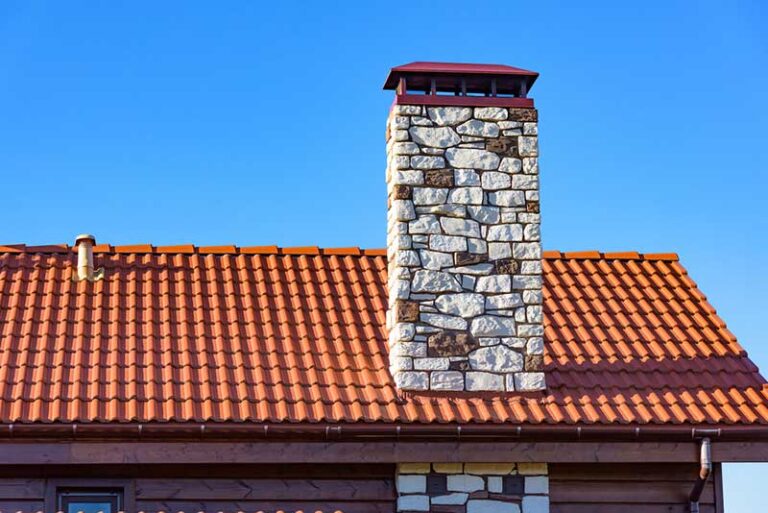
Much of the Hill Country and the New Braunfels to San Antonio corridor sits on expansive clay soils. These soils swell when they take on moisture and shrink as they dry out, and Central Texas gives them plenty of both, through wet spells and long dry stretches. That movement does not stay in the ground. It moves the foundation of the home, and a chimney, which is heavy and often tied into the foundation, moves with it. Soil-driven movement is a leading cause of the more serious chimney cracks in the region: the cracks that run through brick and mortar together, the gaps that open where the chimney meets the house, and chimneys that begin to lean.
Water Still Plays a Role
Heat and soil are the headline forces, but water has not left the story. When Central Texas does get rain, often heavy, sudden downpours, porous masonry absorbs it. Cracks already opened by heat cycling and soil movement give that water an easy way in, and once inside it accelerates the breakdown of the masonry and can reach the chimney interior. The regional forces compound each other: heat cycling and soil movement open the cracks, and water exploits them.
Signs Your Central Texas Chimney Is Cracking
A few signs are worth watching for.
- Cracks in the mortar joints or running through the brick of the chimney.
- Brick faces that are flaking, spalling, or crumbling.
- Gaps opening where the chimney meets the roof or the exterior wall.
- A chimney that appears to be leaning or pulling away from the house.
- White, chalky staining or general weathering of the masonry.
- Pieces of masonry found on the roof or the ground near the chimney base.
A chimney cannot be removed from the Central Texas climate, but it can be protected against it. Regular professional inspection is the foundation, since it catches small cracks while they are still small. Masonry repairs, tuckpointing failing mortar joints and replacing spalled brick, should be done promptly, before heat cycling and water widen them. A breathable masonry waterproofing treatment helps by keeping water out of the cracks the climate opens. A sound chimney cap and crown keep water out of the flue and off the masonry. And any sign of the more serious, soil-driven cracking, leaning, separating, or stair-step cracks, warrants prompt professional evaluation, because structural movement does not resolve on its own.
Cosmetic Cracks or Structural Cracks?
The question every homeowner asks when they see a crack is whether it is serious. It is a fair question, and while only an inspection can answer it for certain, there is a useful general distinction. Cosmetic cracks are the routine result of weathering and heat cycling: thin cracks in the mortar joints, minor surface cracking, light spalling. They should be repaired, because they let water in, but they are not emergencies, and tuckpointing and brick replacement handle them.
Structural cracks are different. Cracks that run continuously through both brick and mortar, often in a stair-step pattern, gaps that open where the chimney meets the house, and a chimney that is leaning or pulling away all point to movement, frequently the soil-driven foundation movement common in the Hill Country. These are not cosmetic, and they do not resolve on their own. They warrant prompt professional evaluation, because a structural problem caught early has more, and less costly, solutions than one left to worsen. The reason a professional evaluation matters even for cracks that look minor is that the two types can be hard to tell apart from the ground, and a structural issue can begin as something that looks ordinary.
Why Timing Matters in Central Texas
Whatever the crack, time is not on the chimney’s side. Heat cycling continues every day, the sun does not relent, and the Hill Country soils keep moving with every wet and dry spell. A crack does not pause while a homeowner decides what to do; it widens. The homeowners who keep chimney repairs small and affordable are the ones who treat a crack as a signal to get an inspection rather than something to watch for another year. Catching masonry damage early, before water and the climate have widened it, is the single most effective way to keep a Central Texas chimney sound and the repair bills modest.
The Wolfman Approach
Wolfman Chimney and Fireplace evaluates a chimney with the actual Central Texas climate in mind, the heat cycling, the sun, and the Hill Country soils, rather than applying advice meant for a colder region. The team documents what it finds and explains it plainly, so a homeowner understands which cracks are routine weathering and which point to something more serious. Protecting a chimney here is not complicated, but it does take attention, and it takes a company that understands what this climate actually does to masonry. A homeowner who understands what is happening to their chimney is in a far better position to protect it.
Frequently Asked Questions
Why does my chimney crack if Central Texas does not have hard freezes?
Central Texas chimneys crack mainly from heat cycling, not freeze-thaw. The region’s wide daily temperature swings make masonry expand and contract constantly, which opens and widens cracks over time. Intense sun and the movement of Hill Country clay soils add to the stress.
What is heat cycling?
Heat cycling is the daily expansion and contraction of masonry as temperatures rise and fall. Central Texas swings through wide temperature ranges, so a chimney’s brick and mortar expand and contract every day. Over months and years, that repeated movement opens hairline cracks and loosens mortar joints.
Can soil really damage my chimney?
Yes. Much of the Central Texas Hill Country sits on expansive clay soil that swells with moisture and shrinks when dry. That movement shifts the home’s foundation, and the chimney moves with it. Soil movement is a leading cause of the more serious cracks, gaps, and leaning chimneys in the region.
Which chimney cracks are serious?
Hairline cracks in mortar are common weathering and should be repaired but are not emergencies. Cracks that run continuously through brick and mortar, gaps where the chimney meets the house, stair-step cracks, and a leaning chimney point to structural or soil-driven movement and warrant prompt professional evaluation.
How can I protect my chimney in the Central Texas climate?
Have the chimney inspected regularly, repair failing mortar and spalled brick promptly, consider a breathable masonry waterproofing treatment, and keep a sound chimney cap and crown in place. Address any signs of structural movement quickly. These steps protect the chimney against heat cycling, sun, soil movement, and water.
Does waterproofing help a Central Texas chimney?
It can. A breathable masonry waterproofing treatment keeps water from being absorbed into the brick and from getting into the cracks that heat cycling and soil movement open. It is applied to sound masonry and works best alongside any needed repairs, not as a substitute for them.
Noticing cracks in your Central Texas chimney? Contact Wolfman Chimney and Fireplace for an inspection that accounts for what this climate really does to masonry. Our CSIA-certified technicians, C-DET certified for dryer exhaust work, and NCSG Master Chimney Professional credentialed, are one of the few teams in the region holding the full credential set for this work.