Skip to content

Most homeowners think about their chimney twice a year at most. Once when the first cold front rolls through and the fireplace gets its first fire of the season, and once when something goes wrong. A smell. A draft that will not pull. Water staining on the ceiling near the chase.
That gap is where the trouble accumulates. A chimney is a ventilation system that handles combustion byproducts, and like any ventilation system it collects residue, loses efficiency, and eventually fails if nobody maintains it. The question is not really whether chimneys need cleaning. It is what actually builds up in there, how fast it happens in our climate, and when it makes sense to schedule the work.
What Actually Builds Up Inside a Chimney
Three things accumulate in a chimney system, and they cause different problems.
Creosote is the big one. When wood burns, it releases unburned particles and gases that condense on the cooler interior surfaces of your flue. Chimney professionals classify creosote in three stages. Stage 1 is a light, flaky soot that a standard sweep removes easily. Stage 2 is a harder, tar-like deposit that requires more aggressive rotary tools. Stage 3 is a glazed, hardened layer that has to be chemically treated or mechanically removed, and it is highly combustible. Professional creosote removal exists precisely because a chimney fire needs very little to get going once Stage 3 is present.
The speed of that progression depends on how you burn. Unseasoned wood, smoldering low fires, and restricted air supply all accelerate creosote formation. A homeowner burning green mesquite on a damp evening with the damper half closed is building Stage 2 deposits far faster than someone burning seasoned oak in a hot, well-drafted fire.
Soot and ash collect on the smoke shelf and in the firebox. Less dangerous than creosote, but soot is acidic, and over time it degrades mortar joints and the refractory materials that line your firebox.
Debris and nesting material is the one Central Texas homeowners underestimate. Our long warm season gives birds, squirrels, and wasps roughly nine months of opportunity to move into an unused flue. A nest blocking a flue is both a draft problem and a carbon monoxide risk, and it is one of the most common findings when a chimney has gone unswept through a mild winter.
Why Central Texas Chimneys Are a Different Case
Chimney advice written for the Midwest or Northeast does not transfer cleanly to the Hill Country, and following it can leave you with the wrong maintenance schedule.
Our chimneys are not failing from repeated deep freezing. They are failing from expansion-contraction cycling driven by heat. A masonry chimney in New Braunfels or Alamo Heights can sit at surface temperatures well above 120 degrees on an August afternoon and drop thirty or forty degrees overnight when a front pushes through. Repeat that through five months of summer, year after year, and mortar joints open, crowns develop hairline cracks, and flashing seals fatigue.
Add intense UV exposure, which breaks down the sealants and chase cover finishes on factory-built systems, and the flash flooding events that test every joint and flashing seam in a single afternoon, and you have a climate that degrades chimney exteriors aggressively even though the interiors see relatively little use.
That last part is the trap. Because Central Texas winters are mild, many homeowners burn only a handful of fires a year and conclude their chimney does not need attention. Low usage does slow creosote accumulation. It does nothing to slow masonry deterioration, moisture intrusion, or wildlife. Some of the worst chimney conditions we find are on systems that have barely been used and never been looked at.
Our expansive clay soils compound it. Seasonal soil movement shifts foundations, and a chimney is a heavy masonry structure attached to a house that is moving. That shows up as separation at the roofline, cracked crowns, and the stair-step pattern you sometimes see running up an exterior stack. We covered the mechanics of that in more detail in why Central Texas chimneys crack.
Warning Signs Your Chimney Needs Attention
You do not need to guess. Several signals are reliable enough to act on.
A strong campfire or barbecue smell coming from the fireplace on humid days usually means creosote buildup reacting to moisture in the air. Smoke pushing back into the room points to a draft restriction, whether from buildup, a nest, or a damper problem. Black, oily, or flaky residue visible on the damper or in the firebox is creosote you can see, which means there is more you cannot.
On the exterior, white chalky staining on the brick is efflorescence, mineral salts carried to the surface by moisture moving through the masonry. It is a moisture indicator, not a cosmetic issue. Crumbling mortar joints, a cracked or spalling crown, and rust on the damper or firebox all point to water getting where it should not.
Inside the house, staining on the ceiling or wall near the chimney means the moisture has already made it in. At that point the conversation shifts from cleaning to chimney leak repair, and the longer it goes, the more of the system gets involved.
How Often Should You Schedule Cleaning and Inspection?
The National Fire Protection Association standard, NFPA 211, calls for an annual inspection of every chimney, fireplace, and vent, regardless of how much you use it. Cleaning is a separate question, driven by what the inspection finds.
That distinction matters and gets lost constantly. An inspection tells you the condition of the system. A sweep removes deposits. You may need an inspection every year and a sweep every second or third year, or you may need both annually if you burn frequently. What you should not do is skip the inspection because you did not burn much.
Inspections come in three levels, and knowing which one you need saves money.
Level 1
The standard annual inspection for a system in continued service with no changes and no known problems. The technician examines readily accessible portions of the chimney exterior and interior and the accessible connections.
Level 2
Required when you sell or buy a property, after you change fuel types, after any operating malfunction, or following an event that could have damaged the system such as a chimney fire, an earthquake, or a severe storm. It includes everything in Level 1 plus accessible attics, crawlspaces, and basements, and it includes video scanning of the flue interior.
Level 3
The most invasive level, reserved for cases where a serious hazard is suspected and confirming it requires removing components such as a chimney crown or an interior chase wall.
Most Central Texas homes need a Level 1 annually. If you have bought a house in the last year, converted from wood to gas, or had any kind of chimney event, you need a Level 2.
The Best Time of Year to Book in Central Texas
This is where Central Texas homeowners have an advantage that most do not use.
In colder climates, everyone books in September and October and the schedule compresses into a few frantic weeks. Here, our heating season is short and concentrated, which makes the seasonal rush even sharper. From roughly late September through December, chimney companies across the Austin and San Antonio corridor are booked out, and the homeowner who calls the week of the first cold front is often waiting.
Booking in spring or summer solves several problems at once.
- You get the appointment you want. Off-season scheduling means choosing a day that works for you rather than taking whatever is available three weeks out.
- Your technician is not rushed. A sweep booked in June has time to look at the crown, the flashing, and the chase cover properly, and to talk through what they found. The same appointment in November competes with a queue.
- Repairs have room to happen. If an inspection in May turns up a cracked crown or deteriorated mortar joints, you have months to schedule the crown repair or waterproofing before you need the fireplace. The same finding in November means either burning on a compromised system or going without.
- You can budget deliberately. Discovering a significant repair in spring gives you time to plan for it. Discovering it in late fall means deciding under pressure.
The counterintuitive part is that the best time to think about your fireplace is when you are running the air conditioning. Homeowners in Tarrytown, Hyde Park, Castle Hills, and Canyon Lake who book their annual service in the off-season consistently have an easier heating season than the ones who wait for the weather to remind them.
What Cleaning and Inspection Typically Cost
Pricing varies with the system, the access, and what the inspection turns up, so treat the following as educational context rather than a quote.
A standard Level 1 inspection paired with a sweep for a single open masonry fireplace generally falls in the low-to-mid hundreds. A Level 2 inspection with video scanning runs higher because of the equipment and time involved. Systems with difficult roof access, multiple flues, or heavy Stage 2 and Stage 3 creosote take longer and cost more, and Stage 3 removal in particular is a specialized job.
The variable that moves the number most is what has been deferred. A system inspected every year rarely produces surprises. A system that has gone six or eight years without attention frequently needs masonry repair, a new chimney cap, or moisture remediation on top of the cleaning itself. Annual maintenance is genuinely cheaper than the alternative, which is the least interesting and most accurate thing anyone can tell you about chimney care.
Any reputable company will give you a firm number before work begins. If someone quotes a sweep over the phone without knowing your system, be cautious.
Can You Inspect or Clean Your Own Chimney?
Partly, and it is worth being honest about where the line falls.
You can absolutely do a useful visual check yourself. Open the damper and look up with a flashlight. Look for daylight at the top, which tells you the flue is not fully blocked. Look at the damper surfaces for creosote. Check the firebox for cracked refractory panels or crumbling mortar. Walk outside and look at the crown, the cap, and the mortar joints from the ground with binoculars. That five-minute check catches obvious problems and tells you whether something has changed since last year.
What a homeowner check cannot do is evaluate the flue liner. Liner condition is the single most safety-critical element of the system, cracks and gaps are frequently invisible from below, and assessing it properly requires video scanning equipment. A homeowner also cannot reliably identify Stage 2 versus Stage 3 creosote, assess flashing integrity from a safe position, or evaluate draft performance under load.
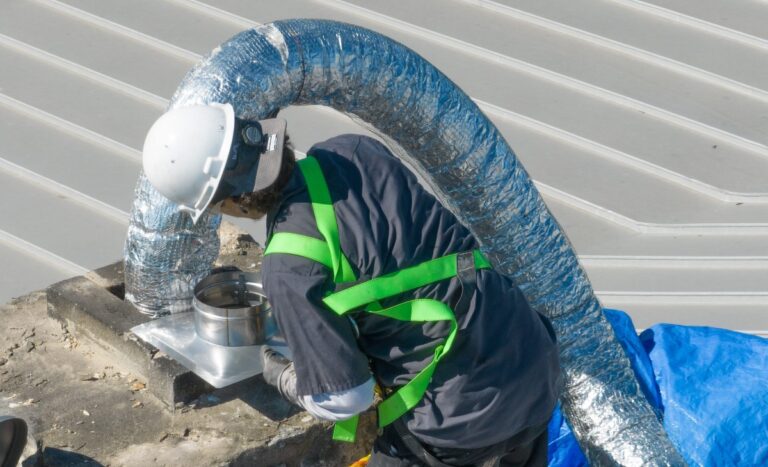
On cleaning, brush-and-rod kits sold at hardware stores will move Stage 1 soot. They will not touch glazed creosote, they tend to push debris into the smoke chamber rather than removing it, and the roof work involved is the part where people get hurt. The equipment difference is real: professional chimney sweeps use rotary systems with negative-pressure containment, which is why a proper sweep does not leave soot in your living room.
The reasonable split is that you handle the between-visit visual checks and the burning practices, and a certified technician handles the annual inspection and the sweep. Wolfman’s technicians hold CSIA certification, the C-DET credential for dryer exhaust work, and the National Chimney Sweep Guild’s Master Chimney Professional designation, and the company has held an A+ BBB rating since November 2021.
Building Chimney Care Into Your Routine
The homeowners who never have a chimney emergency tend to do the same handful of things.
They book the annual inspection at the same time each year, usually in spring or early summer, so it becomes a calendar item rather than a reaction. They burn seasoned hardwood and keep fires hot rather than smoldering, which slows creosote formation more than any other single habit. They do the quick visual check a couple of times a year. They keep a cap on the chimney, which is the cheapest wildlife and water defense available. And they address small findings when they are small, because a hairline crown crack in June is a different job than a water-damaged smoke chamber in January.
None of that is complicated. It just has to be deliberate, because a chimney in a mild climate will not remind you it needs attention until the problem is expensive.
Frequently Asked Questions
A: Inspected annually, swept as needed. NFPA 211 calls for an annual inspection regardless of usage. How often it needs an actual sweep depends on how much you burn and what you burn. A household that burns a dozen fires a winter with seasoned wood may go two or three years between sweeps. A household burning several times a week may need one every year. The inspection is what tells you.
A: Yes. Gas systems produce less creosote but still generate combustion byproducts and moisture that corrode flue liners and vent components. Gas appliances also have venting that can be blocked by debris or nesting, which is a carbon monoxide risk. Annual inspection applies to gas fireplaces the same as wood-burning systems.
A: This is the most common mistake we see in Central Texas. Low usage slows creosote buildup and does nothing else. Unused flues are the ones that collect nests, and masonry deterioration from heat cycling, UV, and soil movement happens whether you light a fire or not.
A: An inspection evaluates the condition and safety of the system. A sweep removes creosote, soot, and debris. They are often performed in the same visit, but they answer different questions, and you can need one without the other.
A: Spring and summer, for practical rather than technical reasons. You get better appointment availability, a less rushed visit, and enough runway to complete any repairs the inspection finds before the first cold front.
A: Usually creosote residue reacting to humidity, or something in the flue. Mild, humid Central Texas conditions bring out odors from deposits that stay quiet in dry weather. If the smell is new or strong, it is worth having looked at, and it is sometimes an early indicator of a draft or moisture problem.
Working With a Central Texas Team
Central Texas chimneys work differently than the ones most maintenance advice is written for. Less burning, harsher conditions on the outside, and a short intense season when everyone needs service at once.
If it has been more than a year since anyone looked at your system, or you have never had it inspected, schedule an appointment with our team. Wolfman Chimney and Fireplace serves homeowners across New Braunfels, San Antonio, and Austin and the surrounding Hill Country communities.