Skip to content

Most Austin homeowners think about the fireplace exactly once a year, on the first evening the temperature finally drops below sixty. You turn the key valve, press the igniter, and either the burner lights the way it always has or nothing happens. At Wolfman Chimney & Fireplace, that first cold evening is the busiest phone day on our Austin calendar, and almost every call could have been a quiet appointment six weeks earlier.
Gas fireplaces have a reputation for being maintenance free, and next to a wood-burning system that is partly earned. What a Travis County home running its fireplace fifteen evenings a year actually has is nine months of an idle gas appliance inside a chase absorbing punishing summer heat and direct sun. That is what our CSIA-certified technicians find in Tarrytown, Hyde Park, Barton Hills, Circle C, Mueller, and out through Bee Cave and Lakeway.
Why Austin Gas Fireplaces Spend More Time Idle Than Burning
Low usage is not a reason to skip service. It is the reason service matters. Components in a gas appliance are designed to be exercised. Pilot assemblies stay cleaner when they run, gas valves seat better when they cycle, and blowers distribute lubricant when they spin. A system idle through an Austin summer is one where dust settles, insects nest, and metal parts cycle without ever running properly.
The chase compounds the problem. Central Texas chases take sustained triple-digit surface temperatures, relentless ultraviolet exposure, then sudden cooling when a storm rolls in off the Hill Country. That expansion-contraction cycling works on sealants, chase covers, and flashing all summer. This is a heat and sun problem, not the winter frost damage that drives deterioration in colder markets.
What Actually Degrades in an Idle Gas System
Pilot Assemblies, Thermocouples, and Thermopiles
The safety circuit on a standing pilot system depends on a small sensor generating a tiny current from the pilot flame. If that current falls below spec, the gas valve closes. That is the system working correctly, and it is the most common reason a fireplace refuses to stay lit. Dust film, spider webbing in the pilot orifice, corrosion, and age all reduce the signal. A technician measures millivolt output rather than guessing.
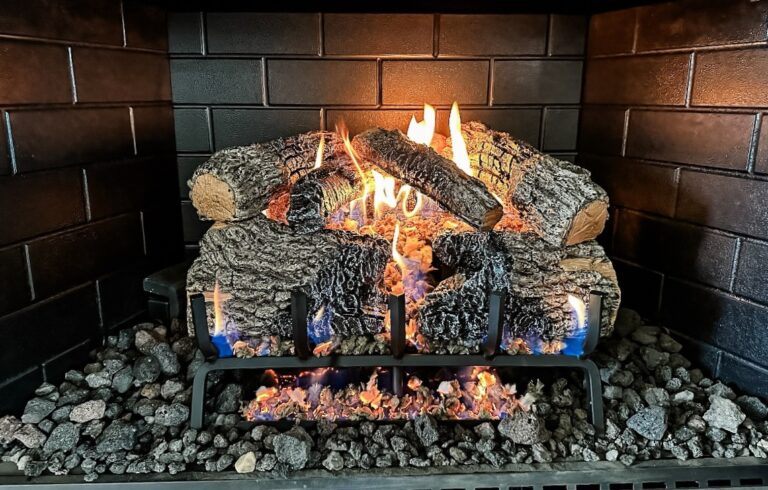
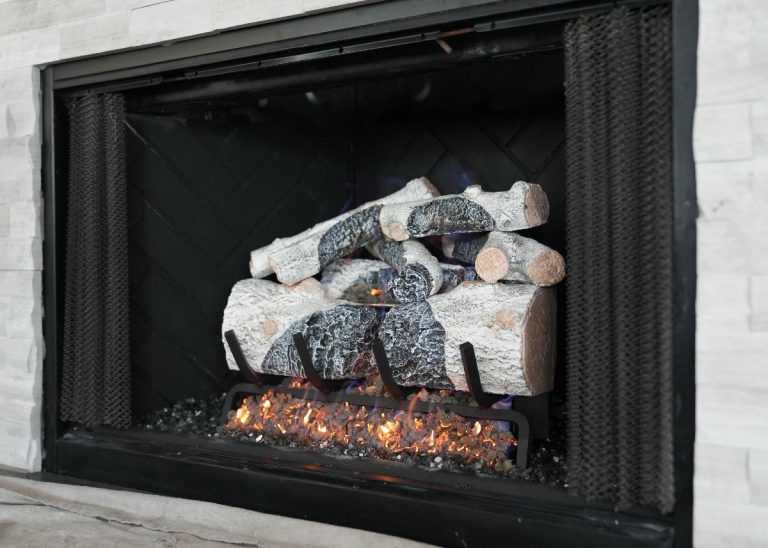
Gas Logs, Embers, and Refractory Panels
Ceramic log sets are consumable. They crack, shift out of the manufacturer specified position, and burn their ember material down over time. Log placement is not decorative. A log moved an inch can push flame onto a spot it was never meant to touch, producing soot on the glass. Refractory panels behind the logs also craze and crack under repeated heating.
Venting, Dampers, and Chase Components
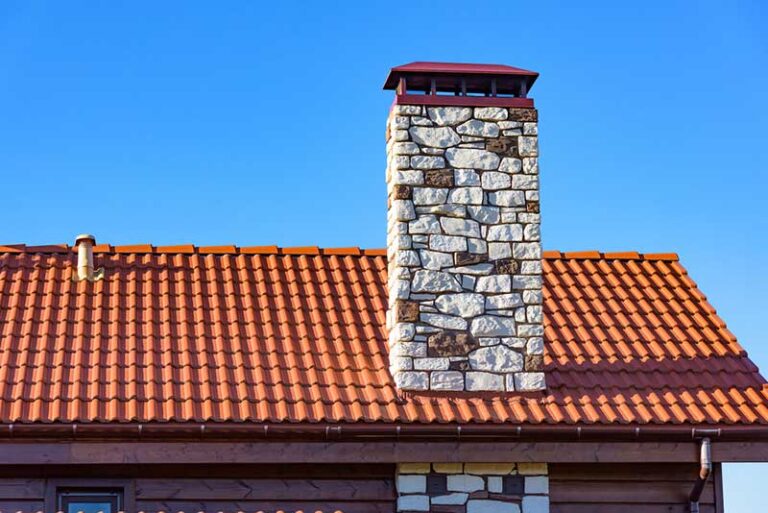
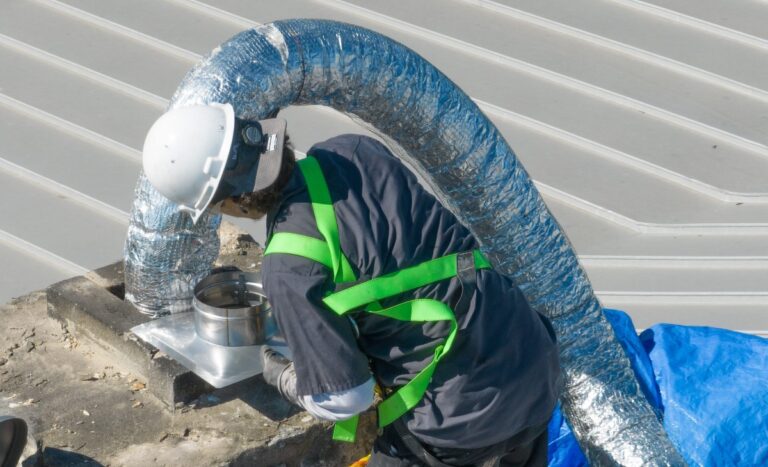
Direct vent systems rely on a sealed coaxial pipe with intact gaskets and a clear termination. A vented gas log set relies on a damper locked open, because a log set in a closed-damper chimney is a carbon monoxide hazard. Above the roofline, the chase cover, storm collar, and flashing keep driving rain out, and Austin sun degrades them fastest.
Warning Signs Austin Homeowners Notice First
This section is educational, meant to help you recognize and describe a problem, not fix one. Gas appliance repair is not a homeowner project, and your manufacturer manual carries model-specific instructions that supersede general guidance, including ours.
- The pilot lights but the main burner will not stay on, or the pilot drops out entirely.
- A sooty gray or black film builds on the glass within an evening or two of burning.
- A sharp or sour odor persists past the first minutes of a season-opening burn.
- The flame looks lazy and orange, lifting off the burner rather than steady and defined.
- The blower rattles, squeals, or does not engage at operating temperature.
- The glass front does not seal cleanly, or a gasket looks flattened, brittle, or missing.
One safety note outranks the rest. If you smell gas, do not operate switches, hunt for the source, or troubleshoot. Leave the home and call your gas utility from outside. Carbon monoxide is odorless, so a working CO alarm on every level is not optional.
What a Professional Gas Fireplace Service Visit Covers
A proper annual service is a systematic pass through the appliance, the venting, and the safety controls. Our technicians hold CSIA certification through the Chimney Safety Institute of America plus the NCSG Master Chimney Professional credential.
- Verify gas pressure at the appliance and confirm the shutoff valve operates correctly.
- Clean the burner ports, pilot assembly, and injector, then test safety circuit output against spec.
- Remove, clean, and reset the log set to the exact configuration documented for that model.
- Inspect refractory panels, firebox, glass, and gasket seal for cracking or failure.
- Confirm the venting path is clear and sealed, including the termination and any damper lock.
- Service the blower and controls, then run full heat cycles and observe the flame.
Gas Fireplace Service Compared With Wood-Burning Chimney Service
Homeowners who have owned both systems often assume the annual visit is the same appointment under a different name.
| Factor | Gas Fireplace or Gas Log Service | Wood-Burning Chimney Service |
|---|---|---|
| Primary concern | Gas train, safety circuit, venting integrity | Creosote accumulation and flue condition |
| Main hazard addressed | Carbon monoxide and gas leakage | Chimney fire and flue deterioration |
| Austin frequency | Annually, before burn season | Annually per NFPA 211 |
| Consumable parts | Pilot sensors, gaskets, ember material, logs | Few, though liners and caps wear |
| Mess involved | Minimal dust and soot film | Significant without containment |
| Best booking window | Late August through October | Late summer through early fall |
What Gas Fireplace Service Costs in the Austin Area
Cost transparency is part of how we work, with the caveat that any figure published on a blog is educational rather than a quote. Annual gas fireplace maintenance in our Central Texas service area generally runs $400 to $600. That range covers a full service visit on a standard residential appliance and moves with access difficulty and appliance type.
Repairs are separate from maintenance and depend on what the evaluation finds. A pilot assembly cleaned back to spec costs nothing beyond the visit. A failed component needing a manufacturer part is a conversation we would rather have in September than on a cold December evening.
When Service Is Not the Right Answer
Sometimes the honest recommendation is to stop maintaining an appliance. A unit in the ten to fifteen year range with multiple failing components, a discontinued parts supply, or a compromised firebox is a replacement candidate, and we will say so rather than sell a fourth repair. The opposite case is just as common: a fireplace that will not light is often just a dusty pilot orifice. That is why the evaluation comes before the estimate, and why we document findings with photographs.
Timing Your Service Before the First Cold Snap
Austin gets its first meaningful cold front between late October and early December, and it never announces itself. The week it arrives, every chimney company in Travis County books solid. Scheduling in late summer or early fall means a convenient appointment, an unhurried technician, and lead time for any part that needs ordering.
If the home is new to you, the case is stronger. A gas fireplace in a house you just bought has an unknown service history, unknown installation quality, and possibly a log set someone rearranged for looks. A Level 1 inspection paired with a gas service visit establishes a baseline.
Wolfman Chimney & Fireplace is family owned and operated, works from four Central Texas locations, and holds a BBB A+ rating with accreditation since November 2021. Our Austin technicians carry CSIA, C-DET, and NCSG Master Chimney Professional credentials, and we would rather explain your system than sell you something you do not need.
Ready to get the fireplace handled before the rush? Call the Wolfman Austin office at (512) 866-9917 or request an appointment online, and we will send a certified technician to service your gas fireplace or gas log set while the calendar is still on your side.
Related Services
- Austin chimney inspection
- Austin chimney and fireplace services
- Chimney and fireplace service in Austin
Frequently Asked Questions
How often does a gas fireplace need service in Austin?
Annually, even though Austin homeowners burn far fewer hours than homeowners in colder climates. Low usage is exactly why service matters here. An appliance idle for nine months collects dust in the pilot assembly, gathers insect nesting in burner ports, and goes through a Central Texas summer of heat cycling on its venting without ever running.
Why will my pilot light but the main burner will not stay on?
Usually a weak safety circuit signal. The sensor in the pilot flame generates a small current that holds the gas valve open, and dust, corrosion, or age can drop it below what the valve needs. The valve then closes, which is the safety system working correctly. Any work on the gas train belongs to a qualified professional following the manufacturer instructions.
What does gas fireplace service cost in the Austin area?
Annual gas fireplace maintenance in our Central Texas service area generally runs $400 to $600 for a standard residential appliance. That figure is educational rather than a quote. Actual pricing depends on appliance type, roof and chase access, and what the evaluation uncovers. Repairs are estimated separately.
Does a gas fireplace still need the chimney inspected?
Yes. A gas log set in a masonry fireplace vents through that chimney, so the flue, damper, crown, and cap remain part of the safety system. Direct vent appliances have sealed venting that must stay intact and clear at the termination, and Austin sun and driving rain work hard on chase covers and flashing every summer.
Should I convert my wood-burning fireplace to gas instead of servicing it?
That is a separate decision, depending on how you use the fireplace, the condition of your masonry and flue, and what you want from the system. Conversion makes real sense for many Central Texas homes given our short burn season, but evaluate it on its own terms rather than as a reaction to a repair estimate.
When is the best time to schedule gas fireplace service in Austin?
Late August through October. Austin typically sees its first significant cold front between late October and early December, and demand spikes the same week it arrives. Booking early means a convenient slot, an unhurried technician, and lead time to order any manufacturer part.