Skip to content

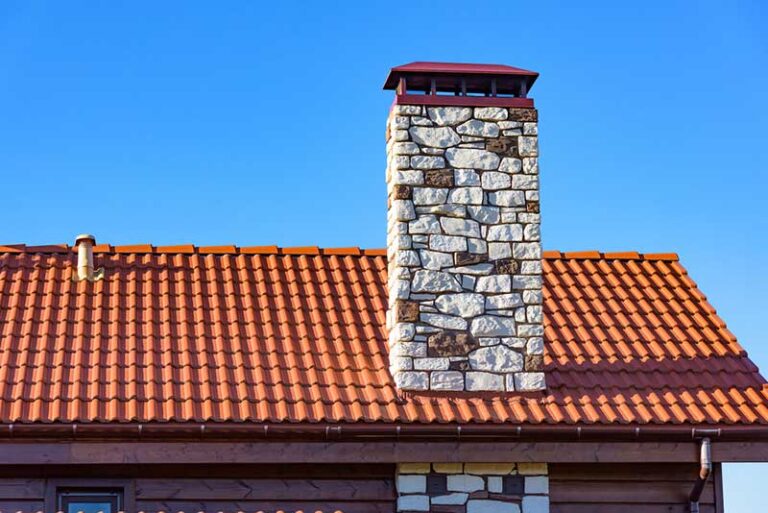
Most homeowners picture the bricks, the flue, or the firebox when they think about their chimney. The two components doing the most protective work sit at the very top, where you cannot see them.
They get talked about together, which causes confusion, because they are different parts with different jobs, materials, and failure modes. Knowing which is which makes it easier to understand what you are looking at when something goes wrong.
Cap Versus Crown: Two Parts, Two Jobs
| Chimney Cap | Chimney Crown | |
|---|---|---|
| What it is | A metal cover mounted over the flue opening | A sloped masonry or concrete slab covering the top of the chimney structure |
| What it protects | The flue itself | The entire top surface of the chimney, including the brick and mortar below |
| Typical material | Stainless steel, galvanized steel, copper | Portland cement mortar or cast concrete |
| Common failure | Rust, mesh damage, blow-off, poor fit | Cracking, spalling, no overhang, thin construction |
| Also does | Blocks animals, contains sparks, reduces downdrafts | Directs water away from the masonry below |
The short version is that the cap covers the hole and the crown covers everything around the hole. You need both, and a failure in either one lets water into a system that is expensive to dry out.
What a Chimney Cap Does
Keeps Water Out of the Flue
An open flue is a vertical pipe pointed at the sky. Every rain sends water straight down it to the smoke chamber, damper, and firebox, where it rusts steel components, breaks down mortar joints between clay tiles, and corrodes metal liners from the inside.
Central Texas makes this worse than the rainfall totals suggest. We get long dry stretches and then several inches in a single afternoon, which delivers a large volume of water fast, and an uncapped flue takes all of it.
Blocks Animals and Nesting Debris
Our long warm season gives birds, squirrels, raccoons, and wasps a wide window to move into an unused flue. A nest is an effective plug, and a plugged flue means smoke and carbon monoxide have nowhere to go but back into the house. The mesh sides of a properly fitted cap keep that from happening.
Contains Sparks and Embers
This is the part that matters most in the Hill Country and gets the least attention. Most quality caps include a spark arrestor, the mesh screening that catches hot embers before they leave the flue.
In a wet climate an ember landing on a roof or in the yard usually goes out. Here it lands on a composition roof, in cured grass, or in Ashe juniper, one of the most flammable native species in Texas. Comal, Hays, Travis, and Bexar counties issue burn bans in most drought years for exactly this reason. If you burn during a dry stretch, the mesh on your cap is real fire protection, not a detail.
Reduces Downdrafts
Wind striking a roofline or a taller neighboring structure can push air down the chimney instead of pulling across it. A cap with the right profile disrupts that and reduces how often smoke gets pushed back into the room.
What a Chimney Crown Does
The crown is the sloped slab across the top of the chimney structure, and it is the single most important waterproofing element on the system. It should be poured from a proper cement mix, slope away from the flue tile so water runs off, and extend past the brick face with a drip edge so runoff falls clear of the masonry.
That last detail is where a lot of crowns fail, and not from age. A crown built flush with the brick sends water straight down the face of the chimney every time it rains. A crown mixed from ordinary mortar, or poured too thin, cracks early. None of those are maintenance problems. They are construction problems that show up years later.
Once the crown cracks, water gets into the chimney structure itself. From there you get deteriorating mortar joints, spalling brick where trapped moisture pushes the face off, efflorescence staining on the exterior, and eventually damage inside the house.
Why Central Texas Is Harder on Caps and Crowns Than You Would Think
Most chimney maintenance advice assumes freeze-thaw damage is the main threat. That is not our failure mode, and expecting the wrong one means watching for the wrong signs.
Our crowns fail from expansion-contraction cycling. Summer surface temperatures on a masonry crown facing full sun are extreme, and the material expands. Overnight it contracts. Repeat that daily for years and hairline cracks open into real ones. Intense UV compounds it by breaking down crown sealants and the finish on factory-built chase covers faster than in cloudier regions.
Then the water arrives all at once. A crown with hairline cracking might shed a drizzle but cannot handle four inches in two hours, which is a normal Central Texas storm. Hail damages cap mesh and lids. And our expansive clay soils shift with the wet and dry cycle, moving the chimney structure enough to open joints at the top.
The practical consequence: a crown here can be ten years old and structurally compromised without a single freeze being involved.
Signs Your Cap or Crown Needs Attention
You can see most of these from the ground or from inside the firebox, and none of them require getting on the roof.
Rust staining running down the exterior brick usually means the cap or a metal component above it is corroding. Water in the firebox after a storm, or a damp smell following rain, means water is getting past something at the top. White chalky staining is efflorescence, mineral salts carried to the surface by moisture moving through the masonry, and it means water is inside the structure. Visible cracking on the crown, a cap that is missing, tilted, or has damaged mesh, and animal activity around the chimney opening all belong on the list.
If you notice any of these, the right next step is an inspection rather than a guess. Catching a hairline crown crack while it is still a sealant job is a very different conversation than catching it after the mortar joints below have deteriorated.
Repair, Recoat, or Rebuild
Crowns fall into three categories, and knowing which one you are in prevents both overspending and underfixing.
A crown in good shape with minor surface cracking is usually a candidate for a flexible crown coating, a membrane applied over the existing crown that seals hairline cracks and moves with the masonry through our heat cycling. This is the least invasive option and works well when caught early.
A crown with structural cracking, missing sections, or no overhang generally needs to be rebuilt. A rebuild is the chance to correct the original construction defect by building in a proper slope and a real drip edge, which is why a rebuilt crown often outlasts the one it replaced by a wide margin.
Caps are simpler. A damaged cap gets replaced, and the decision is mostly material. Galvanized steel is cheapest and the first to rust. Stainless steel costs more upfront and holds up to our UV and humidity. Copper is the premium option, usually chosen for appearance. Fit matters as much as material, because a cap that does not match the flue dimensions will not seal correctly.
Where This Fits in Annual Maintenance
The cap and crown are checked as part of a standard Level 1 inspection, which NFPA 211 calls for annually regardless of how much you use the fireplace. That is worth emphasizing here, because light usage is the norm and homeowners reasonably assume a fireplace they rarely light does not need attention. Water damage does not care how often you burn.
Spring and early summer are the practical time to schedule. A crown crack found in May gets addressed before the fall rush, on your schedule rather than during the first cold snap.
Wolfman Chimney & Fireplace serves New Braunfels, San Antonio, Austin, and the Hill Country with CSIA-certified technicians. If it has been more than a year since anyone looked at the top of your chimney, or you have rust stains, a damp firebox, or visible cracking, resolve it before the next storm.
Frequently Asked Questions
It is the least expensive part of the system and it prevents the most expensive problems. Without one, rain goes straight down the flue, animals nest in it, and hot embers leave unscreened. In a drought-prone area like the Hill Country, that last point is a genuine fire safety issue.
The cap is a metal cover over the flue opening that keeps out water, animals, and sparks. The crown is the sloped masonry slab across the top of the chimney that sheds water away from the brick and mortar. Different parts, different failure modes.
A properly built crown with adequate thickness and a real overhang can last decades. One poured thin, built flush with the brick, or mixed from ordinary mortar can crack within a few years, and our heat cycling and UV exposure accelerate that. Construction quality matters more than age.
A metal roof reduces one risk but not the others. Embers landing in cured grass, mulch beds, or nearby Ashe juniper are still a concern in dry conditions, and the same mesh keeps animals out. Some jurisdictions require spark arrestors on wood-burning appliances.
Those are the most common sources, but flashing where the chimney meets the roof, deteriorated mortar joints, and unsealed masonry can all let water in. Diagnosing it properly means identifying the actual entry point rather than sealing the most visible suspect.
You can do a useful check from the ground and from inside the firebox, looking for rust stains, a missing or tilted cap, efflorescence, and moisture after rain. Do not climb onto the roof. Evaluating crown condition and cap fit requires being at the top of the chimney, which is a job for a technician with the right equipment.